• About

The art and science of the possible

~ A celebration of non-zero sum thinking

The art and science of the possible

Tag Archives: business

Passion: the best competitive strategy

06 Thursday Jun 2013

Posted by lnedelescu in business, human capital, management, Organizational Development, Uncategorized

≈ Leave a comment

Tags

business, Emotions, Kennedy, Leadership, Love, Napoleon, Passion, War

Napoleon

Let me attempt a positive twist to Napoleon’s “all’s fair in love and war” as applied to the world of business. Let me first propose that Napoleon’s insightful correlation can be extended to business in the first place. Love, war and business all have in common the competitive side of human nature – for the sake of procreation in the first case, and for survival in the other two. In all cases things have a high likelihood of becoming (very) personal, and when things get personal emotions usually flare.

Continue reading →

Post-causality: a quiet global revolution in the making

05 Wednesday Jun 2013

Posted by lnedelescu in business, capitalism, complexity, consulting, democracy, future, human capital, innovation, knowledge, management, philosophy, problem solving, society, taxonomy, technology

≈ Leave a comment

Tags

Big Data, business, Categorization, causality, Cause and Effect, complexity, creativity, Cynefin, Daniel Pink, Dave Snowden, Drucker, Drucker Forum, Emergence, future, Imagination, Innovation, Knowledge, management, Methods, models, Motivation, Peter Checkland, Resilience, Revolution, Roger Martin, Russell Ackoff, Safety, Sense Making, Social Systems, Society

http://p.soledadpenades.com

If one were to cut a global cross-section through social classes, nationalities, ethnicities, ages, professions, genders, and so forth, very few commonalities would emerge. And yet, there is I propose just such a common thread: a shared causality mindset, a globally predominant belief in the supremacy of cause and effect.

Since it is people who run our institutions, this belief continues to shape our modern society and even influence to a large extent the technological outcrops of our knowledge economy. From business strategy to macroeconomic models, and from political debates to Big Data, causality is pervasive and its implications profound.

Continue reading →

The mechanistic world view continues to be reinforced by Information Technology

22 Wednesday May 2013

Posted by lnedelescu in business, management, society, technology

≈ Leave a comment

Tags

Analytics, Big Data, business, creativity, Frederick Taylor, Humanity, Information Technology, Knowledge Economy, Machines vs. Humans, management, Manufacturing, Mechanistic Thinking, Process, Production, Research and Development, Workflow, World View

Image

This will be a very short blog post. I am not going to make an elaborate argument. Rather, I would like the “evidence” to speak for itself. My thesis is that Information Technology (IT) continues to proliferate mechanistic thinking in business, more than a century after Frederick Taylor fathered the science of workflow analysis and labor productivity in a manufacturing intensive economy. While we’ve since moved on to the knowledge economy, we have yet to abandon manufacturing thinking.

Continue reading →

Why the “individuality disorder” is the great tacit crisis of our times and how complexity informed management can help resolve it

18 Saturday May 2013

Posted by lnedelescu in business, Communication, complexity, Crisis, future, human capital, management, Organizational Development, paradox, philosophy, society

≈ 1 Comment

Tags

Ackoff, Ambiguity, Black Swans, business, complexity, Corporations, Disorder, Dissonance, Drucker Forum 2013, False Comfort, future, Hamel, Hollnagel, Humanity, Individuality, Industrial Revolution, management, Organizational Development, paradox, philosophy, Predictability, Professional Fulfillment, Resilience, Resonance, Scale, Snowden, Society, Taleb, Variance, Wall Street

Image

With all the benefits derived from the advances in standard of living, our modern society suffers from an apparent paradox which can be best paraphrased as “if everyone is special, then no one is”.

We strive for individuality even as the economic affluence required to express ourselves is increasingly tied to economies of scale and the uniformity they foster. We do our best to proclaim our uniqueness to the world on social media pages, but have to make use of highly standardized templates in the process. We share in the belief (and rightfully so) that the very success of our modern society depends on scale, yet it is precisely scale that appears to generate confusion when it comes to the most intimate aspects of our human identity.

Continue reading →

Severe business crisis turn-around: turning vicious “tailspins” into virtuous dynamics

13 Monday May 2013

Posted by lnedelescu in business, consulting, Crisis, strategy

≈ Leave a comment

Tags

business, Business Development, Crisis Turnaround, Recovery, Risk, Selectivity, strategy, Tailspin, Vicious vs. Virtuous Cycles

Image

Just like aviation seems to have mastered the science of stable flight, so does business look stable and predictable from afar. But at a closer look tailspins are never far-away and remain a possibility. Many companies don’t go out of business over prolonged periods of decline, but rather suddenly. The warning signs for a vicious cycle are there, but the signals are usually weak and management overlooks them until it is too late. At that point revenue spirals downward, less money is available to pursue new business resulting in a reduced probability of getting business, and the enterprise is headed straight for a spectacular crash.

I will save the details for how a company enters tailspin for another blog, but here I want to focus on the key strategy to recover from vicious cycles, and even turn them around into virtuous ones.

Continue reading →

Complexity forces the distinction between strategy and planning

02 Thursday May 2013

Posted by lnedelescu in complexity, design thinking, management, strategy, taxonomy

≈ Leave a comment

Tags

Ackoff, business, complexity, Cynefin, Design Thinking, Idealized Design, Martin, Planning, Playing to Win, Roger Martin, Snowden, strategy

Image

Following the publishing of his latest book, “Playing to Win”, Roger Martin has made a paramount distinction between strategy and planning. Having the greatest respect for Roger Martin’s thinking, I usually take his insights as foundational. Since foundational insights are few and far between, there’s a likelihood that other thinkers have come across similar distinctions. I didn’t have to search for long to find echoing insights in the work of Russell Ackoff, systems thinker emeritus, and Dave Snowden, complexity guru.

Continue reading →

Frameworks, trade-spaces, matrices: engineering thinking in management results in big, stagnant bureaucracies

25 Thursday Apr 2013

Posted by lnedelescu in complexity, consulting, human capital, management, Organizational Development, science, strategy, taxonomy, technology

≈ 2 Comments

Tags

Analytic Thinking, bureaucracy, business, complexity, effectiveness, Engineering, future, management, models, philosophy, Validity

The most important function of management, particularly executive management, is setting future direction. That implies decisions and choices about the present and future.

Because engineering thinking or more broadly speaking analytic thinking predominates in many executive and consulting circles, it is believed that decisions require a degree of rigorousness similar to that of the scientific method in natural sciences. And so, it is firmly believed that analytic tools empower managers to make sound decisions. The result is a myriad of tools reminiscent of engineering speak – frameworks, trade-spaces, matrices – packaged in neat Power Point slides.

This all very good, but, as philosopher of science Isabelle Stengers remarks  “tools are demanding – they do not confer the power of judging, they ask for the choice of the right tool for the right situation; in other words they oblige us to think and wonder”. The danger that Stengers cautions against is the rigid interpretation of the power of tools. Tool power should never be situated above human judgement. And when it does, this results in the tools getting a life of their own, and embedding the human element which is helpless to escape their hold. This ultimately results in a bureaucratic construct as the purpose of humans becomes not the seeking of meaning and validity, but rather the maintenance and upgrading of the tools. This also results in a proliferation of enforcer types at the expense of creative types, reducing the number and quality of choices about the future.

A more progressive view of management tools is as “enlightening abstractions, precious new tools for thinking” rather than “ready made instruments”. Also, in Stenger’s view, the relationship between user and tool is not one-directional; rather, “tools modify the ones who use them; to learn how to use a tool is to enter a new relation with reality, both an aesthetic and practical new relation”. In my experience, this dual directionality can also unfortunately work backwards: rigid tools can have a limiting effect on thinking.

Source of Isabelle Stengers quotations is “The Challenge of complexity: Unfolding the ethics of science – In Memoriam Ilya Prigogine”

Also check out Dave Snowden’s related blog entry.

The type of corporate hypocrisy that won’t fly in the future

15 Monday Apr 2013

Posted by lnedelescu in business, future, society

≈ Leave a comment

Tags

business, Competitive advantage, corporate hypocrisy, customer experience, customer service, feedback, online surveys, Technology

Image

Here’s an example of corporate hypocrisy I’m sure you’ve run across. You cancel a service and you receive an email that asks for your feedback in the form of a “brief online survey”. At the bottom of the generic “no-reply” email is a link to a survey along with the signature of some corporate executive with a real name, say Fred Doe, Executive Vice President, Customer Service. Here’s the hypocrisy. If all is wanted is a stencil multiple choice feedback, then why not a generic corporate signature in line with the generic computer generated message? On the other hand, if a real person is involved, then why is the person’s email missing and the “no-reply” option turned on?

The answer is that this type of approach aims to reconcile the human with the technological. Technology is used to interface with the consumer, but there is an embedded emotional trigger. Large companies are particularly susceptible to this type of approach since they have many more consumers than employees, and so it is believed that a personalized connection to the consumer is impossible. But in this case consumers can be treated as adults rather than presented with cheap emotional tricks. I propose that in the future large companies that will find ways to address this issue, that will be able to combine economies of scale with personalized service, will have a significant competitive advantage. This is the holy grail for customer service in a world where business is becoming bigger just as the consumer is becoming increasingly aware of his individuality.

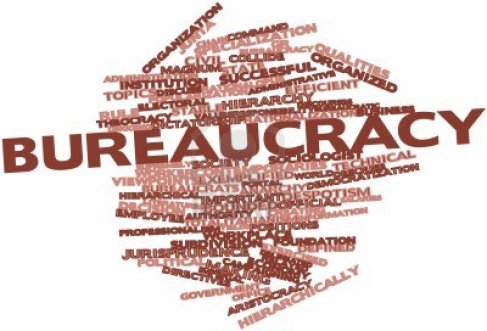
Why bureaucracies and effective solutions don’t mix

24 Sunday Mar 2013

Posted by lnedelescu in management

≈ Leave a comment

Tags

authority, budget, bureaucracy, business, Innovation, noneffective, opinion, politics, public sector, solution

Image

Let’s take the perspective of a bureaucrat. His or her authority is in large part derived from the budget he or she commands, and the number of people managed. What is therefore his or her unstated objective? To increase the budget commanded, or at least, to ensure the budget is maintained. Spend less one year but attain the job’s objectives, and superiors could reduce next year’s budget, with a corresponding reduction in authority. No good.

So to simplify, the assertion is that bureaucracy’s objective is to spend. Now the private sector also spends. A private enterprise spends on business solutions. In that environment, solutions are judged by the ability to address a problem more effectively, which usually includes a reduction in cost. And so, if a bureaucrat would spend on effective solutions, these would point out inefficiencies and the fact that the same job could be done with less. This is in direct conflict with a bureaucracy’s survival. And so, a bureaucracy not only has an interest to increase spending, but it has to make sure that whatever “solutions” it acquires never reveal its own inefficiencies.

Bureaucracies will of course advertise their appetite for solutions. But saying something and meaning it are different things. And so, there are many more than willing to sell just such “solutions” to bureaucracies: the ineffective type. These are usually the out of context type “fixes” concentrating on “blind” efficiency, measuring quantity but not quality. As an example, instituting a workflow management solution that tracks the number of meetings as proof of work being done. Never-mind whether worthwhile conclusions or good decisions are being reached.

Now let’s step back to effective solutions. The ultimate in solution effectiveness renders a job obsolete. In the private sector that works out well since innovation creates new problems to be solved and thus new jobs (Clay Christensen of course contends that even the private sector is not investing in sustainable innovation lately, but let’s leave that aside for now). So unlike the private sector, bureaucracies have to be ever vigilant they don’t work themselves out of a job. That is because they do jobs which are supposed to be around forever addressing unchanging societal needs, like social security.

But from what we know so far about the universe and the life it supports, nothing is forever. So why should bureaucracies? What if societal needs are changing and not static as bureaucracies appear to assume? Why shouldn’t bureaucracies adopt solutions that put them “out of business” and force them to innovate new jobs that address more complex problems beneficial to the improvement of society at large? What if we found a way to incentivize bureaucracies to reward innovation and risk? What if the bureaucratic concept itself is an “unnatural” invention that doesn’t reflect the true characteristics of social systems? What if bureaucrats themselves live a false sense of fulfillment that resumes to stability and job security but traps their higher human aspirations for creativity, competitiveness and continual renewal, for challence and change? What if bureaucracies are bad for everyone involved and there is a smarter way to fulfilling the purpose they presumably serve?

Strategy is…

21 Thursday Mar 2013

Posted by lnedelescu in consulting, design thinking, human capital, strategy

≈ Leave a comment

Tags

Accenture, business, creativity, future, Harvard, Harvard Business Review, human, McKinsey, philosophy, Porter, strategy

1974 Robinson's Wrap acrylic

Strategy is adding constitution to an ambiguous mess we call the future. Strategy focuses discernible choices from the fog of ambiguity by way of assertions and assumptions. It reduces the universe’s entropy. Strategy is deliberate choice. Strategy is awareness and self-awareness. Strategy is wisdom: it is a mirror. Strategy is integrative and convergent. Strategy is identity.

Strategy is not political correctness, nor is it group consensus. It is selective and competitive. It does not agree well with bell curves. Strategy is neither nice nor nasty. Yet it will be deemed heretic and non-compassionate, unfair. Good strategy is controversial. Good strategists will be called dictators, non-team players, naive, inconsiderate. Strategy is participatory only as a common pursuit of a better state of affairs. Strategy is fair to those who wish for better. It is unfair to those who hang on to the past. Strategy is change.

Strategy is creative. It is substantive. It is pleasing to the eye. It appeals to common sense and it is not information overload. It is a straight-forward perception of an in-achievable ideal: truth. It exposes cowardliness, laziness, hypocrisy, envy, falseness by denying them opportunity to hide behind the curtain of ambiguity. Strategy is accountability. Strategy is transparency. It is risk and courage. Strategy is sacrifice. Strategy is long term and it makes things worse before so they can be better. Strategy is responsibility. It is leadership. It is patience and self-control. Strategy builds character and nourishes morality and ethics.

Strategy is narrative. It is forged of convictions and ideals and desires. It is biased. It is ideological and not technocratic. Strategy is subjective and incomplete, but not superficial. Strategy makes leaps of fact and logic. Strategy is not planning and it cannot be proved. Strategy is not a simple process with discrete steps that spews guaranteed and repeatable results – it isn’t an algorithm (sorry Professor Porter, HBR, McKinsey and others). Sustainable strategy is not imitation. It isn’t bench-marking, performance, metrics and measurements (sorry Accenture, CapGemini and others). Strategy isn’t statistics. Strategy is not business process re-engineering. It is discontinuous. Strategy is organic. Strategy is adaptive and resilient. It is educated trial and error. Strategy is real and surreal: surreal because it describes what does not yet exist, real because the future is always born of the inference between what is and what could be.

Strategy is personal and quintessentially human. Strategy is enlightenment and fulfillment and wisdom. Sustainable strategy is the ambition to better oneself while not wishing others ill. Sustainable strategy is not playing zero sum games. Strategy is humbleness. It is observation, empathy, comparison, categorization. Strategy is artful design. It is meditation and self-reflection. Strategy is play. It is fun and thrill and adrenaline. Strategy is loneliness and hopelessness. It is pain and failure and rebirth. Strategy is cumulative. Strategy is a liberating journey. It is a quest for purpose and meaning with no room for regrets.

← Older posts
Newer posts →

Categories

business capitalism Communication complexity consulting Crisis democracy design thinking Emerging Markets future human capital innovation Investment knowledge learning management Organizational Development paradox philosophy problem solving sales science society strategy taxonomy technology Uncategorized

Latest

  • Intelligence is Intentional
  • Plenty of Room at the Top: the case for a viable man-machine economic future
  • What does an “innovation economy” really mean?
  • Lightfoot strategy
  • Capital: a brief philosophy

Archives

  • June 2015
  • May 2015
  • April 2015
  • March 2015
  • February 2015
  • January 2015
  • December 2014
  • November 2014
  • October 2014
  • August 2014
  • June 2014
  • March 2014
  • February 2014
  • January 2014
  • November 2013
  • October 2013
  • September 2013
  • August 2013
  • July 2013
  • June 2013
  • May 2013
  • April 2013
  • March 2013
  • February 2013
  • January 2013
  • December 2012
  • November 2012
  • October 2012

Create a free website or blog at WordPress.com.

Privacy & Cookies: This site uses cookies. By continuing to use this website, you agree to their use.
To find out more, including how to control cookies, see here: Cookie Policy
  • Subscribe Subscribed
    • The art and science of the possible
    • Join 151 other subscribers
    • Already have a WordPress.com account? Log in now.
    • The art and science of the possible
    • Subscribe Subscribed
    • Sign up
    • Log in
    • Report this content
    • View site in Reader
    • Manage subscriptions
    • Collapse this bar
 

Loading Comments...