• About

The art and science of the possible

~ A celebration of non-zero sum thinking

The art and science of the possible

Category Archives: business

It is through strategy and invention that morality and profitability become symbiotic

21 Friday Jun 2013

Posted by lnedelescu in business, capitalism, Organizational Development, society, strategy

≈ 2 Comments

Tags

2008 financial crisis, business, Enron, Invention, Machiavelli, Morality, Society, Speculation, strategy, Wall Street

Image

With Enron still in recent collective memory, business has not fully recovered its morality and ethics standing. And the 2008 financial crisis didn’t help, in fact lowering trust in the world’s business establishment. So the question of whether morality and profitability in business can be symbiotic is fair. I had not really formed an opinion on this issue until the very recent past, when several incidents in my professional life gave me no choice but to do so.

And so, having pondered the issue, I believe there is an answer that constructively transcends the growing divide between the pro-profit and anti-corporate, anti-globalization groups. In short, business success doesn’t have to be synonymous with immorality. The key to achieving a symbiosis between profitability and morality is in my opinion a combination of strategy and invention.


Continue reading →

Why it may take crisis to become a better integrative thinker

17 Monday Jun 2013

Posted by lnedelescu in business, Crisis, design thinking

≈ Leave a comment

Tags

Creative Tension, Crisis, integrative thinking, problem solving, Roger Martin, Short Term vs. Long term

Image

They say mistakes are key to learning. Having had my share, I couldn’t agree more. But I would say while mistakes are great learning experiences, crises exercise a unique mental capacity for (wicked) problem solving: integrative thinking.

Roger Martin defines integrative thinking as the “ability to constructively face the tensions of opposing models, and instead of choosing one at the expense of the other, generating a creative solution of the tensions in the form of a new model that contains elements of the individual models, but is superiors to each”.

Continue reading →

On leadership

13 Thursday Jun 2013

Posted by lnedelescu in business, human capital, management, Organizational Development

≈ Leave a comment

Tags

creative design, Leadership, Russell Ackoff, Sense Making, visioning, W. Arthur Brian

leadership-penguins1

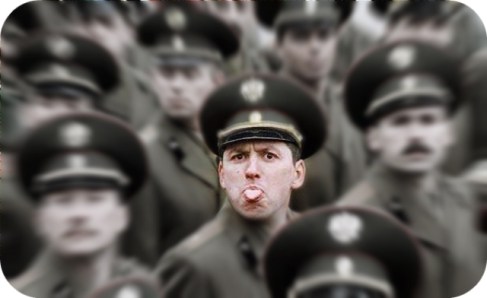
We all like to think of ourselves as moderate, reasonable beings, but as a society are never too far from extreme viewpoints – call it the peer pressure effect or our desire to fit in. As an example, the collective view on leadership has swung completely from the authoritative, masculine figure exerting total control to the unobtrusive nurturer of talent. We made no pause along the way to ponder the possibility of exaggeration and overreaction. Dare say the leader still has a very real and involved role in the organization and you are likely to be black listed and deemed a heretic nowadays. Say the leader should politely evaporate, and the audience immediately erupts in applause.

Continue reading →

Passion: the best competitive strategy

06 Thursday Jun 2013

Posted by lnedelescu in business, human capital, management, Organizational Development, Uncategorized

≈ Leave a comment

Tags

business, Emotions, Kennedy, Leadership, Love, Napoleon, Passion, War

Napoleon

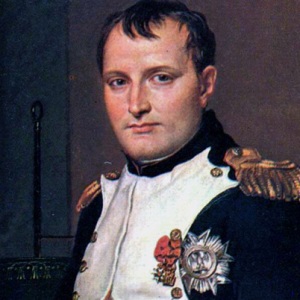
Let me attempt a positive twist to Napoleon’s “all’s fair in love and war” as applied to the world of business. Let me first propose that Napoleon’s insightful correlation can be extended to business in the first place. Love, war and business all have in common the competitive side of human nature – for the sake of procreation in the first case, and for survival in the other two. In all cases things have a high likelihood of becoming (very) personal, and when things get personal emotions usually flare.

Continue reading →

Post-causality: a quiet global revolution in the making

05 Wednesday Jun 2013

Posted by lnedelescu in business, capitalism, complexity, consulting, democracy, future, human capital, innovation, knowledge, management, philosophy, problem solving, society, taxonomy, technology

≈ Leave a comment

Tags

Big Data, business, Categorization, causality, Cause and Effect, complexity, creativity, Cynefin, Daniel Pink, Dave Snowden, Drucker, Drucker Forum, Emergence, future, Imagination, Innovation, Knowledge, management, Methods, models, Motivation, Peter Checkland, Resilience, Revolution, Roger Martin, Russell Ackoff, Safety, Sense Making, Social Systems, Society

http://p.soledadpenades.com

If one were to cut a global cross-section through social classes, nationalities, ethnicities, ages, professions, genders, and so forth, very few commonalities would emerge. And yet, there is I propose just such a common thread: a shared causality mindset, a globally predominant belief in the supremacy of cause and effect.

Since it is people who run our institutions, this belief continues to shape our modern society and even influence to a large extent the technological outcrops of our knowledge economy. From business strategy to macroeconomic models, and from political debates to Big Data, causality is pervasive and its implications profound.

Continue reading →

The irony of supply and demand in emerging economies as seen through the eyes of design thinking

22 Wednesday May 2013

Posted by lnedelescu in business, design thinking, Emerging Markets, human capital, society

≈ Leave a comment

Tags

Abductive Reasoning, Absurdity, Advanced Economies, Centralized Economies, Centralized Planning, Design Thinking, Emerging Markets, Globalization, Ilf and Petrov, Information Technology, Innovation, Multinationals, Roger Martin, Supply-Demand, Validity Thinking

Image

Many of the countries now part of the emerging economies club can trace their recent history to totalitarian regimes and centralized economies. What centralized political and economic paradigms have proven to have in common is a proliferation of material shortages coupled with propaganda driven, unrealistic plans. And so, under such regimes, populations found creative ways to adapt by learning to by-pass absurd rules and plans and to find ways of obtaining much needed resources outside of official distribution channels.

Continue reading →

The mechanistic world view continues to be reinforced by Information Technology

22 Wednesday May 2013

Posted by lnedelescu in business, management, society, technology

≈ Leave a comment

Tags

Analytics, Big Data, business, creativity, Frederick Taylor, Humanity, Information Technology, Knowledge Economy, Machines vs. Humans, management, Manufacturing, Mechanistic Thinking, Process, Production, Research and Development, Workflow, World View

Image

This will be a very short blog post. I am not going to make an elaborate argument. Rather, I would like the “evidence” to speak for itself. My thesis is that Information Technology (IT) continues to proliferate mechanistic thinking in business, more than a century after Frederick Taylor fathered the science of workflow analysis and labor productivity in a manufacturing intensive economy. While we’ve since moved on to the knowledge economy, we have yet to abandon manufacturing thinking.

Continue reading →

Why the “individuality disorder” is the great tacit crisis of our times and how complexity informed management can help resolve it

18 Saturday May 2013

Posted by lnedelescu in business, Communication, complexity, Crisis, future, human capital, management, Organizational Development, paradox, philosophy, society

≈ 1 Comment

Tags

Ackoff, Ambiguity, Black Swans, business, complexity, Corporations, Disorder, Dissonance, Drucker Forum 2013, False Comfort, future, Hamel, Hollnagel, Humanity, Individuality, Industrial Revolution, management, Organizational Development, paradox, philosophy, Predictability, Professional Fulfillment, Resilience, Resonance, Scale, Snowden, Society, Taleb, Variance, Wall Street

Image

With all the benefits derived from the advances in standard of living, our modern society suffers from an apparent paradox which can be best paraphrased as “if everyone is special, then no one is”.

We strive for individuality even as the economic affluence required to express ourselves is increasingly tied to economies of scale and the uniformity they foster. We do our best to proclaim our uniqueness to the world on social media pages, but have to make use of highly standardized templates in the process. We share in the belief (and rightfully so) that the very success of our modern society depends on scale, yet it is precisely scale that appears to generate confusion when it comes to the most intimate aspects of our human identity.

Continue reading →

How subtle is the psychology of communication

14 Tuesday May 2013

Posted by lnedelescu in business, Communication, complexity, consulting, human capital, learning, Organizational Development, society

≈ 2 Comments

Tags

Coercion, Communication, Complex Adaptive Systems, complexity, culture, Cynefin, Dave Snowden, Human Behavior, Language, Leadership, Psychology, Resonance, SenseMaker, Slogans

Image

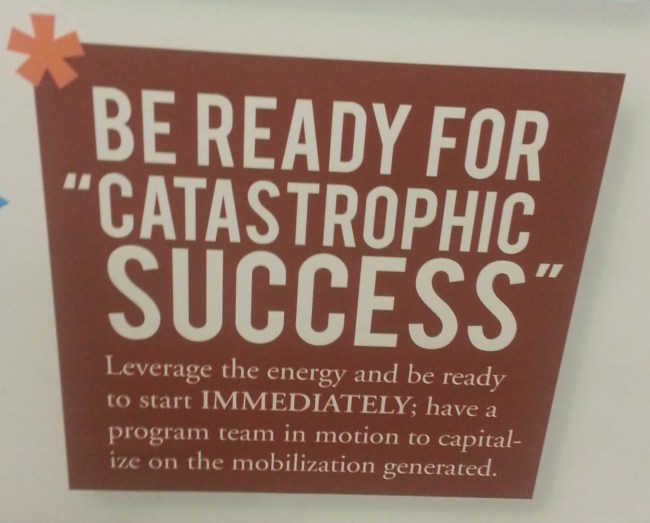
I ran into this blog by Dave Snowden and I was absolutely impressed with the insights he introduces on communication being a double edged sword: illuminating on one hand, or having the potential to be used to coerce. He proposes that context-devoid slogans found on corporate posters and value statements don’t serve any educational or inspirational purpose, and rather quite the opposite: they often become tools for coercion driving a compliance organizational culture.

Continue reading →

Severe business crisis turn-around: turning vicious “tailspins” into virtuous dynamics

13 Monday May 2013

Posted by lnedelescu in business, consulting, Crisis, strategy

≈ Leave a comment

Tags

business, Business Development, Crisis Turnaround, Recovery, Risk, Selectivity, strategy, Tailspin, Vicious vs. Virtuous Cycles

Image

Just like aviation seems to have mastered the science of stable flight, so does business look stable and predictable from afar. But at a closer look tailspins are never far-away and remain a possibility. Many companies don’t go out of business over prolonged periods of decline, but rather suddenly. The warning signs for a vicious cycle are there, but the signals are usually weak and management overlooks them until it is too late. At that point revenue spirals downward, less money is available to pursue new business resulting in a reduced probability of getting business, and the enterprise is headed straight for a spectacular crash.

I will save the details for how a company enters tailspin for another blog, but here I want to focus on the key strategy to recover from vicious cycles, and even turn them around into virtuous ones.

Continue reading →

← Older posts
Newer posts →

Categories

business capitalism Communication complexity consulting Crisis democracy design thinking Emerging Markets future human capital innovation Investment knowledge learning management Organizational Development paradox philosophy problem solving sales science society strategy taxonomy technology Uncategorized

Latest

  • Intelligence is Intentional
  • Plenty of Room at the Top: the case for a viable man-machine economic future
  • What does an “innovation economy” really mean?
  • Lightfoot strategy
  • Capital: a brief philosophy

Archives

  • June 2015
  • May 2015
  • April 2015
  • March 2015
  • February 2015
  • January 2015
  • December 2014
  • November 2014
  • October 2014
  • August 2014
  • June 2014
  • March 2014
  • February 2014
  • January 2014
  • November 2013
  • October 2013
  • September 2013
  • August 2013
  • July 2013
  • June 2013
  • May 2013
  • April 2013
  • March 2013
  • February 2013
  • January 2013
  • December 2012
  • November 2012
  • October 2012

Blog at WordPress.com.

Privacy & Cookies: This site uses cookies. By continuing to use this website, you agree to their use.
To find out more, including how to control cookies, see here: Cookie Policy
  • Subscribe Subscribed
    • The art and science of the possible
    • Join 151 other subscribers
    • Already have a WordPress.com account? Log in now.
    • The art and science of the possible
    • Subscribe Subscribed
    • Sign up
    • Log in
    • Report this content
    • View site in Reader
    • Manage subscriptions
    • Collapse this bar
 

Loading Comments...