• About

The art and science of the possible

~ A celebration of non-zero sum thinking

The art and science of the possible

Category Archives: innovation

Towards a unified theory of management

07 Tuesday May 2013

Posted by lnedelescu in innovation, management, taxonomy

≈ 1 Comment

Tags

Ackoff, Christensen, complexity, Dave Snowden, David Hurst, Design, Fredmund Malik, Innovation, management, Management Theory, Peter Drucker, Roger Martin

Drucker-reading

Exploration vs. exploitation is a common thread amongst top strategy and management thinkers. Exploration is aimed at the future (strategy, innovation) while exploitation is more aligned with business operations, i.e. efficiency. Does this point to a unified management theory?

Continue reading →

Current HR practices, a significant liability for the world’s future

06 Monday May 2013

Posted by lnedelescu in business, capitalism, future, human capital, innovation, science, society

≈ 4 Comments

Tags

Christensen, Design, HR, human capital, Innovation, Roger Martin

father_time_flying_past (1)

Some of my blog entries may be taken as theoretical exercises. While I make use of the latest thinking, most of the things I write about are in fact directly extracted from personal experience. It is my attempt to turn what could otherwise be called frustrations into constructive insights. I felt this short introduction was necessary simply to add a degree of credibility to what follows. Now let’s get back on topic.

Let’s start with a preview of my thesis. My argument rests on three observations: (1) innovation is vital to our future; (2) innovation is slowing down; (3) current HR practices are a contributing factor. Having argued my case, I will end by providing a few ideas on possible solutions.

Continue reading →

Why innovation is vital to our survival

10 Wednesday Apr 2013

Posted by lnedelescu in innovation

≈ Leave a comment

Tags

complexity, future, Innovation, Nature, science, Society, Technology

Image

Picture technology as a “buffer” between humans and their environment. With each new scientific discovery an environmental constraint is removed, and new resources, usually in the form of energy, become available for exploitation via new technologies.

We require energy in order to counter the constant tendency of the universe to become chaotic (i.e. counter entropy), and to build ever more complex structures needed to support progress. But since any new uncovered source of energy is finite, our civilization has to keep innovating in order to uncover new types of resources. Framed as a critical survival mechanism, innovation becomes much more than a “neat” buzzword. The steady state argument of being content with what we have doesn’t fly because, at any given time, maintaining steady state requires energy we derive from finite resources, such as fossil fuels.

Just like the universe has an in-built tendency for disorder (i.e. entropy), so it seems intelligent life has a natural affinity to discovery. Said differently, progress is not something we necessarily have control over, it’s (in) our destiny.

H.G. Wells remarked that “civilization is a race between disaster and education”. In light of the above, I would say that the race is rather between disaster and innovation. Our educational systems, particularly those related to management and organization, should instill imagination rather than build “static” knowledge and skills.

Christensen’s Category Dilemma

07 Thursday Feb 2013

Posted by lnedelescu in innovation, taxonomy

≈ 1 Comment

Tags

Ackoff, Capitalism, capitalist, Christensen, dilemma, disruptive, Drucker, effectiveness, future, Innovation

Image

“The Innovator’s Dilemma” catapulted Clayton Christensen to the world’s top echelon of innovation experts. He has been called for example the architect of and the world’s foremost authority on disruptive innovation. In the book that became his claim to fame he was first to describe the mechanisms that are behind disruptive innovation, the type of innovation that entranced players never see coming as they are unseated from their dominant market positions by new entrants. Christensen explained how the business world’s Davids can beat their Golliahs.

More recently Christensen upgraded his innovation insights to address a much loftier goal: the future of capitalism. To ensure continuity with his earlier work, he has framed this new-found and larger scope interest with an appropriate catch-phrase: “The Capitalist Dilemma”. In short he proposes that there are different flavors of innovation and that not all innovation creates jobs; in fact innovation can destroy jobs and thus make capitalism unsustainable.

Christensen proposes three innovation categories: empowering, sustaining, and efficiency. A short definition of these and their relationship to job creation and destruction follows (source: http://edition.cnn.com/2013/01/21/business/opinion-clayton-christensen):

“Empowering” innovations transform complicated, costly products that previously had been available only to a few people, into simpler, cheaper products available to many. Empowering innovations create jobs for people who build, distribute, sell and service these products.

“Sustaining” innovations replace old products with new. They have a zero-sum effect on jobs and capital.

“Efficiency” innovations reduce the cost of making and distributing existing products and services. Efficiency innovations almost always reduce the net number of jobs in an industry, allow the same amount of work (or more) to get done using fewer people. 

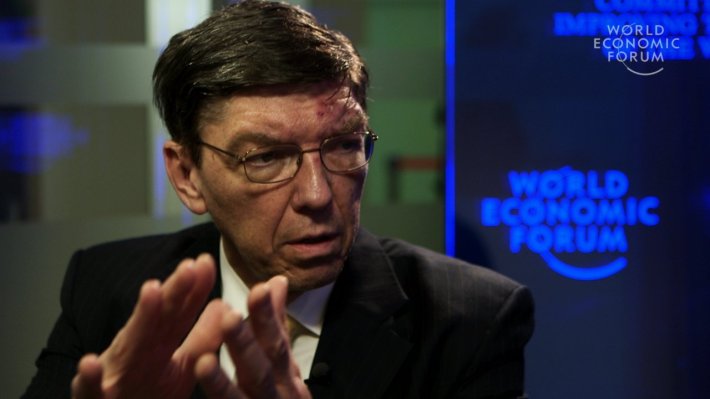
Since the world’s elite are interested in both innovation and the future of capitalism, Christensen was one of the special guests at Davos, where he was asked to clarify his ideas on the fate of capitalism. While non-trivial to understand, his thesis is nonetheless simple to state: there are reasons to believe the world is putting too much emphasis on efficiency innovation, leaving capitalism at risk. Because of an erroneous finance doctrine, as more capital is freed by efficiency innovations, it is put right back into more efficiency innovations, compounding the job elimination effect.

More interestingly however, he started his argument with the need to define the right “categories” for any problem one might tackle, in this case innovation. He said that it took him a long time to arrive at the three innovation categories that finally fit the model for sustainable capitalism.

Now here’s my problem with Christensen categories, which I’ve appropriately termed “Christensen’s Category Dilemma”. But firstly, let me say that in general I absolutely agree with him that a prerequisite to an effective solution is framing the problem rightly, which in many cases means categorizing the problem’s constituent elements correctly. Ambiguity begets ambiguity. But the issue is that he is not acknowledging his predecessor and contemporary thinkers that have already defined similar categories 20-30-40 years ago. To his merit, Christensen applies existing categories to new contexts, resulting in novel insights. And he does so based on pure observation with apparently little a-priory knowledge of the existing related categories. This further reinforces the existing categories. And that in itself – a reconfirmation of existing categories based on observations in new contexts – is a powerful insight providing continuity of thought. And so, Christensen’s “efficiency” innovation category belongs for example to Peter Drucker’s more general “doing things right” category, and “empowering” innovation belongs to “doing the right things” respectively. Efficiency innovation is also traceable to Roger Martin’s “reliability” category, and empowering innovation to Martin’s “validity” category respectively. And the list can continue. Just to be clear, I am not suggesting plagiarism by any means. While Christensen’s categories can be traced to existing thinking, he is applying these to new phenomena resulting in new and unique insights. I am merely proposing that without the tractability to related existing thinking we those following his thinking are poorer when it comes to the larger context.

So the “category dilemma” is this: with fame and glory appears to come a mandate which carries a huge responsibility: that of framing knowledge, of raising the knowledge scaffolding on which others can build. Since success can have a self-reinforcing effect, gurus can find themselves on a pedestal that is largely beyond peer review and they often have the power to define their own categories. With that power also comes the responsibility to connect new knowledge to existing knowledge. That is because naming an existing category by a different name prevents access to potentially very useful insights already proven and tested in the past. In Professor John Gero’s words, “Ontologies provide a domain with a structure for the knowledge in that domain. Domains without ontologies are constantly inventing new terms for existing knowledge and find it difficult to develop foundations on which others can build.” And so, until Christensen and others of his statute acknowledge this implicit responsibility, the “category dilemma” will live on, and the world will make slower progress than it otherwise should.

The reader may have noticed that I did not debate or critique Christensen’s thesis; that is because I wholeheartedly agree with it. I can do so because I can relate Christensen’s thinking to principles that have been proven time and again, which can be traced to evolutionism, complexity, design, and systems thinking. So to me, Christensen’s thesis comes as a confirmation rather than a revelation. But Christensen has a responsibility to not assume that his audience at large can do the same. It’s not a matter of the facts, it’s a matter of the principles.

Davos, innovation and the future of capitalism

23 Wednesday Jan 2013

Posted by lnedelescu in capitalism, democracy, future, innovation, society, taxonomy

≈ Leave a comment

Tags

Ackoff, Capitalism, Christensen, Davos, Drucker, effectiveness, Innovation, management, Martin, Responsibility, Thought Leader

Image

Many of the sessions at Davos 2013 contain “innovation” in the title. Two of the top names in management and innovation are present as well: Clayton Christensen and Roger Martin. Unfortunately, the fact they speak with separate voices about the same underlying phenomena is not helping their cause, which holds more potential for true transformation of the world economy than many of the purely economic insights of the typical Davos crowd:

http://edition.cnn.com/2013/01/21/business/opinion-clayton-christensen/index.html

http://www.rogerlmartin.com/wp-content/themes/rm2009/pdfs/strategy_issue23_thinkingbydesign.pdf

Peter Drucker and Russell Ackoff have 20-30 years ago explained the fundamentals behind the phenomena observed by both Christensen and Martin: in essence effectiveness trumps efficiency. Christensen and Martin thus have a great responsibility, that of acknowledging each other so as to not fragment the legacy of Drucker and Ackoff’s schools of thought; in today’s environment the urgency is such that we can’t afford recreating the Tower of Babel experiment. But even if they and others like them (Dave Snowden, David Hurst, Fredmund Malik, etc.) were to speak with one voice, the real decision makers at Davos will have little clue as to what these two guys are talking about. That is because one can only fully absorb something one can relate to personal experience. Decision makers cannot be taught, even if they had the humility to listen (relevant Ackoff quote: “We don’t recognize that teaching is a major obstruction to learning […] Who in the classroom learns the most…. the teacher. See the classroom is upside down.”).

The power of holistic thinking or how Albert Einstein’s Theory of Relativity could not have been a crowd-sourced innovation

13 Thursday Dec 2012

Posted by lnedelescu in innovation, knowledge, science, society, technology

≈ Leave a comment

Tags

Crowd Sourcing, Einstein, Innovation, science, Society, Technology

I have claimed that all the hype about how the information technology revolution,  culminating with Apple and Facebook, has changed the quality of our civilization may be over-rated.

A lot of the benefits hype associated with social networks and other interconnected means of communication facilitated by information technology may be just that: hype. Networks come with volume (people, information, “likes” and so on) and they do have their benefits: speed with which the information propagates for one and the beginnings of the creation of a global village. But we should not confuse information with wisdom, intelligence and creativity; more quantity of information delivered ever faster does not necessarily mean an increase in the quality of our understanding or wisdom. I’ve used the following example to make my point to several audiences lately: “Einstein’s Theory of Relativity could not have been a crowd-sourced innovation”. And I honestly believe that is true, having provided at least one supporting argument from the management consulting industry (see my blog entry “Russell Ackoff, the Albert Einstein of Management“).

And so I have claimed, supplied limited examples, and will continue to argue over the course of coming posts that some of the world’s top thinkers are in fact aligned with a view that argues for qualitative, holistic path to the world’s progress that can be traced all the way back to roots of Western civilization in ancient Greece.

Below are three examples of insights that go against commonly accepted wisdom. These insights share a common denominator and namely that quality is more important than quantity which is equivalent to effectiveness being more important than efficiency. See also my post on this blog of the fallacy of the business performance consulting model.

In his Harvard Business Review Blog, Jeff Stibel makes the case for intelligence and creativity being a qualitative rather than quantitative, a primarily individualistic rather than group phenomenon:

http://blogs.hbr.org/cs/2011/06/why_a_great_individual_is_bett.html

In a Q&A with Alan Hall at Forbes, Clayton Christiansen, the innovation guru, argues that our obsession with efficiency, based largely in quantitative methods and thinking, is killing innovation:

http://www.businessinsider.com/clay-christensen-our-obsession-with-efficiency-is-killing-innovation-2012-12

The same finger prints of holistic, qualitative thinking can be noticed in Roger Martin’s and Jack Welch’s motivations when arguing against the “shareholder value” concept in economics and business:

http://www.forbes.com/sites/stevedenning/2012/08/29/is-the-hegemony-of-shareholder-value-finally-ending/

Newer posts →

Categories

business capitalism Communication complexity consulting Crisis democracy design thinking Emerging Markets future human capital innovation Investment knowledge learning management Organizational Development paradox philosophy problem solving sales science society strategy taxonomy technology Uncategorized

Latest

  • Intelligence is Intentional
  • Plenty of Room at the Top: the case for a viable man-machine economic future
  • What does an “innovation economy” really mean?
  • Lightfoot strategy
  • Capital: a brief philosophy

Archives

  • June 2015
  • May 2015
  • April 2015
  • March 2015
  • February 2015
  • January 2015
  • December 2014
  • November 2014
  • October 2014
  • August 2014
  • June 2014
  • March 2014
  • February 2014
  • January 2014
  • November 2013
  • October 2013
  • September 2013
  • August 2013
  • July 2013
  • June 2013
  • May 2013
  • April 2013
  • March 2013
  • February 2013
  • January 2013
  • December 2012
  • November 2012
  • October 2012

Create a free website or blog at WordPress.com.

Privacy & Cookies: This site uses cookies. By continuing to use this website, you agree to their use.
To find out more, including how to control cookies, see here: Cookie Policy
  • Subscribe Subscribed
    • The art and science of the possible
    • Join 151 other subscribers
    • Already have a WordPress.com account? Log in now.
    • The art and science of the possible
    • Subscribe Subscribed
    • Sign up
    • Log in
    • Report this content
    • View site in Reader
    • Manage subscriptions
    • Collapse this bar
 

Loading Comments...