
• About

The art and science of the possible

~ A celebration of non-zero sum thinking

The art and science of the possible

Monthly Archives: June 2013

On leadership

13 Thursday Jun 2013

Posted by lnedelescu in business, human capital, management, Organizational Development

≈ Leave a comment

Tags

creative design, Leadership, Russell Ackoff, Sense Making, visioning, W. Arthur Brian

leadership-penguins1

We all like to think of ourselves as moderate, reasonable beings, but as a society are never too far from extreme viewpoints – call it the peer pressure effect or our desire to fit in. As an example, the collective view on leadership has swung completely from the authoritative, masculine figure exerting total control to the unobtrusive nurturer of talent. We made no pause along the way to ponder the possibility of exaggeration and overreaction. Dare say the leader still has a very real and involved role in the organization and you are likely to be black listed and deemed a heretic nowadays. Say the leader should politely evaporate, and the audience immediately erupts in applause.

Continue reading →

Self-awareness: a phenomenon exclusive to the natural world?

13 Thursday Jun 2013

Posted by lnedelescu in human capital, learning, science, society, technology

≈ Leave a comment

Tags

Artificial Intelligence, Cognition, complexity, Double Loop Learning, Intentionality, Meaning, Natural World, Neural Algorithms, Perception, Purpose, Reality, Reflexivity, Self-Awareness, Singularity, Social Science

Image

Self-awareness, key to intentionality, meaning and purpose, may be restricted to the natural world. In social theory, reflexivity refers to a circular relationship between cause and effect in human systems. The latest in complexity and cognitive science – themselves related disciplines – appears to confirm this assertion by social scientists. By the simple act of perception humans can alter the reality they attempt to observe, and in that sense reality and sentient man can be said to intertwine. Out of this inference an emergent phenomenon we call the future limps forward.

Continue reading →

The rising toll of the (still) predominant mechanistic mindset in a complex world

11 Tuesday Jun 2013

Posted by lnedelescu in complexity, Crisis, democracy, future, society

≈ Leave a comment

Tags

causality, Cause and Effect, Charles Handy, complexity, David Hurst, democracy, Ecology, future, Mechanistic, Mindset, Resilience, Robustness, Society, Thinking

Mechanistic_Thinking_EA

Thesis: there is I believe a meta-societal, global shift from robustness to resilience (see this for an intuitive illustration of the difference). This is fueled by an underlying transition from a mechanistic (Industrial Revolution) to a complex-adaptive (Conceptual Economy) worldview.  We have managed to design robust systems (economy, air traffic, healthcare, energy), but not resilient. Robust systems are great for quasi-stable environments, but the price for not having resilience in highly dynamic, networked environments is staggering: $12 trillion for the 2008 financial crisis, and counting. Unless we learn how to design resilient systems, likely through the application of complexity principles, democracy itself may be at risk.

Continue reading →

A few thoughts on the future of education

09 Sunday Jun 2013

Posted by lnedelescu in future, knowledge, learning

≈ 1 Comment

Tags

Ackoff, Clay Christensen, Education, Free Education, future, Harvard, Knowledge, Life long learning, Michael Saylor, Multidisciplinary, Online Education, Roger Martin

Image

Late last year, I was in a small conference room listening to Michael Saylor, the billionaire that is as close as it gets to a Steve Jobs figure, and, luckily for me, happens to reside in the Washington D.C. area. Saylor was discussing his latest book. Besides his compelling case for an American 21st century (when most Americans are predicting the opposite) I remember a point which can be paraphrased as if a 15 year old from India scores better than a Harvard graduate on an online certification test for a particular job, why would one hire the Harvard graduate? In one sentence Saylor exposed preconceptions behind not just national and educational barriers, but also age and experience level. Which naturally leads to the question of Harvard’s relevance, and in general to that of the educational establishment in the 21st century. To drive the point, Michael Saylor has recently started a free online university. Saylor’s university is not yet accredited, but what if entrepreneurs like Saylor start hiring these kinds of “graduates” over those from traditional universities? Clayton Christensen reinforces many of Saylor’s perspectives for how online education will disrupt the educational establishment.

Many of the current arguments made for the future of education involve technology. But what if we take technology out of the picture, is there still something to be said about the future of education? I propose there is.

Continue reading →

Passion: the best competitive strategy

06 Thursday Jun 2013

Posted by lnedelescu in business, human capital, management, Organizational Development, Uncategorized

≈ Leave a comment

Tags

business, Emotions, Kennedy, Leadership, Love, Napoleon, Passion, War

Napoleon

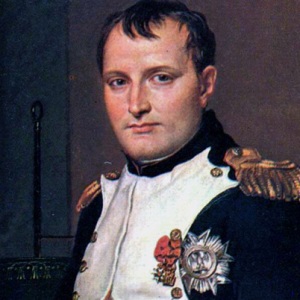
Let me attempt a positive twist to Napoleon’s “all’s fair in love and war” as applied to the world of business. Let me first propose that Napoleon’s insightful correlation can be extended to business in the first place. Love, war and business all have in common the competitive side of human nature – for the sake of procreation in the first case, and for survival in the other two. In all cases things have a high likelihood of becoming (very) personal, and when things get personal emotions usually flare.

Continue reading →

Effective strategy in complex environments, or why a complex world requires abstract thinking

06 Thursday Jun 2013

Posted by lnedelescu in complexity, consulting, human capital, management, strategy, taxonomy

≈ Leave a comment

Tags

Abductive Reasoning, abstract thinking, antifragility, Art, business schools, Categorization, complexity, Daniel Pink, Dave Snowden, hierarchy, integrative thinking, management consulting, Management Theory, mental models, Nassim Taleb, right brain thinking, Roger Martin, Sense Making, statistical analysis, strategy, weak-signals

dalisurreal

As I have recently argued, the world’s top strategists agree that strategy in complex, cause-and-effect blurred environments requires a unique mindset.

According to Snowden and others, in complex environments cause and effect relationships do not repeat and a categorization mindset where data is fit to preconceived notions about reality (i.e. models, frameworks, etc.) is ineffective. This by the way rules out most of the consultants who provide precisely this: prescription style, a-la-carte frameworks and models. What works are sense-making models (to understand the distinction between categorization and sense-making in the words of the world’s top strategists, see my related blog). Categorization models are fast and efficient, but may miss so called “weak signals”, comparatively insignificant data points that are simply part of the average in normal situations, but which can be the source of new emergent patterns in complex circumstances – fat tails and Black Swans respectively in Nassim Taleb parlance.

Continue reading →

Post-causality: a quiet global revolution in the making

05 Wednesday Jun 2013

Posted by lnedelescu in business, capitalism, complexity, consulting, democracy, future, human capital, innovation, knowledge, management, philosophy, problem solving, society, taxonomy, technology

≈ Leave a comment

Tags

Big Data, business, Categorization, causality, Cause and Effect, complexity, creativity, Cynefin, Daniel Pink, Dave Snowden, Drucker, Drucker Forum, Emergence, future, Imagination, Innovation, Knowledge, management, Methods, models, Motivation, Peter Checkland, Resilience, Revolution, Roger Martin, Russell Ackoff, Safety, Sense Making, Social Systems, Society

http://p.soledadpenades.com

If one were to cut a global cross-section through social classes, nationalities, ethnicities, ages, professions, genders, and so forth, very few commonalities would emerge. And yet, there is I propose just such a common thread: a shared causality mindset, a globally predominant belief in the supremacy of cause and effect.

Since it is people who run our institutions, this belief continues to shape our modern society and even influence to a large extent the technological outcrops of our knowledge economy. From business strategy to macroeconomic models, and from political debates to Big Data, causality is pervasive and its implications profound.

Continue reading →

Newer posts →

Categories

business capitalism Communication complexity consulting Crisis democracy design thinking Emerging Markets future human capital innovation Investment knowledge learning management Organizational Development paradox philosophy problem solving sales science society strategy taxonomy technology Uncategorized

Latest

  • Intelligence is Intentional
  • Plenty of Room at the Top: the case for a viable man-machine economic future
  • What does an “innovation economy” really mean?
  • Lightfoot strategy
  • Capital: a brief philosophy

Archives

  • June 2015
  • May 2015
  • April 2015
  • March 2015
  • February 2015
  • January 2015
  • December 2014
  • November 2014
  • October 2014
  • August 2014
  • June 2014
  • March 2014
  • February 2014
  • January 2014
  • November 2013
  • October 2013
  • September 2013
  • August 2013
  • July 2013
  • June 2013
  • May 2013
  • April 2013
  • March 2013
  • February 2013
  • January 2013
  • December 2012
  • November 2012
  • October 2012

Create a free website or blog at WordPress.com.

Privacy & Cookies: This site uses cookies. By continuing to use this website, you agree to their use.
To find out more, including how to control cookies, see here: Cookie Policy
  • Subscribe Subscribed
    • The art and science of the possible
    • Join 151 other subscribers
    • Already have a WordPress.com account? Log in now.
    • The art and science of the possible
    • Subscribe Subscribed
    • Sign up
    • Log in
    • Report this content
    • View site in Reader
    • Manage subscriptions
    • Collapse this bar
 

Loading Comments...