
• About

The art and science of the possible

~ A celebration of non-zero sum thinking

The art and science of the possible

Category Archives: society

Our creativity liquidity crisis

17 Monday Feb 2014

Posted by lnedelescu in capitalism, human capital, problem solving, society, taxonomy

≈ Leave a comment

Tags

creativity, Currency, Economy, George Gilder, Harvard Business Review, Knowledge, Liquidity, Money, Peter Drucker, Roger Martin

Image

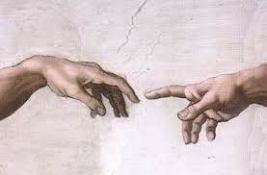
The road from the Renaissance to the iPhone might have taken much longer had the world not invented modern banking and finance. Money, an abstraction of value, is indeed a necessary precursor to globalization. It is also the source of systemic crises when the abstraction loses touch with the underlying value as when sophisticated financial instruments become self-referential.
Continue reading →

Big idea 2014: the world still defenseless against mediocrity

05 Sunday Jan 2014

Posted by lnedelescu in democracy, future, human capital, society

≈ 2 Comments

Tags

2014, causality, creativity, Credo, democracy, Frank Lloyd Wright, If-then, Mediocrity, Progress, Society, Steve Jobs

Image

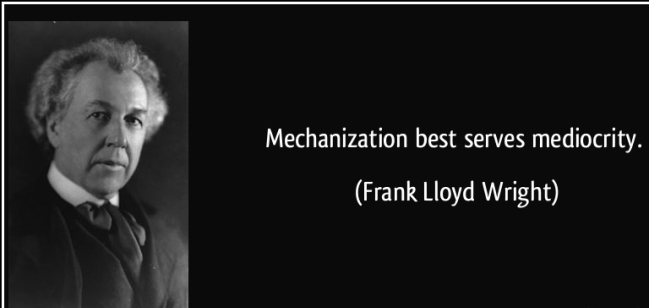
From Ivy League scholars to country presidents, mediocrity permeates society’s highest echelons. Indeed, we remain defenseless against it in the 21st century. We are hard at work battling world financial crises, poverty and social inequality even as we produce mediocre leaders who proliferate populist, symptomatic, efficient but not effective “solutions” to these and other pressing issues. Democracy itself, the most advanced social construct to date, is no match for mediocrity. I propose keeping mediocrity in check is a much more effective way to go about our world’s progress. We would first need to understand how it evades society’s filters.

Continue reading →

On why the pursuit of truth is an asymptotic affair

21 Thursday Nov 2013

Posted by lnedelescu in complexity, knowledge, learning, paradox, philosophy, society

≈ Leave a comment

Tags

Absolute, Cosmology, divinity, George Box, Knowledge Funnel, Leonardo Da Vinci, models, Murray Gell-mann, Progress, Reality, Roger Martin, Singularity, Sistine Chapel, Truth, Universe

Image

Roger Martin’s “knowledge funnel” is a very useful model for understanding the human pursuit of knowledge. Man contemplates a new mystery using intuition to infer causality, by trial and error arrives at an inexact approach that somehow seems to tame the new mystery before finally framing the new phenomenon with the objective precision of a rigorous formula. This is the process by which the vast unknown is distilled into bits of knowledge that our puny minds can manipulate.

Continue reading →

Vienna – random observations

13 Wednesday Nov 2013

Posted by lnedelescu in society

≈ Leave a comment

Tags

Austria, Random Observations, Vienna

Image

Here are a few opinion-free, “pulp” observations of Vienna:

– people take the time to hang their coats on coat hangers and put their umbrellas in umbrella bins;

– it appears safe for small children to walk by themselves on the street;

– you have to pay attention to the writing on restaurant windows: “cafe-restaurant” is very different than “cafe-bar” or “cafe-lounge”;

– you as the paying customer of course have rights, but don’t assume you are the center of the universe;

– there are very few balconies;

– there is still a fascination with American gospel music;

– general dress code leans towards the practical;

– there are many boutique stores with various paraphernalia that seem to get foot traffic.

The True Capitalist Manifesto

29 Tuesday Oct 2013

Posted by lnedelescu in capitalism, future, human capital, philosophy, society

≈ 1 Comment

Tags

Capitalism, Communism, Harvard Business Review, Industrial Revolution, Karl Marx, Knowledge Economy, Manifesto, Umair Hague

Image

Picture the time in which Karl Marx’s Communist Manifesto emerged. The Industrial Revolution, unraveling in full force, was very much based on a materialist world view. Since physical resources are limited it’s only normal that someone, Marx or otherwise, would have signaled that a zero sum race for wealth will make some extremely rich only at the expense of others. And indeed there was some truth to that, as exceedingly ambitious industrialists seemed to have no limit to their greed. There’s no leap of logic required to arrive at the “class warfare” idea aimed to right the inequities generated by a zero sum game world. Accumulation of things, cordially known as consumerism in our time, was also decried by communists as a sickness of the soul.

Continue reading →

Understanding how politics works could help move us forward and avoid political stand-stills

03 Thursday Oct 2013

Posted by lnedelescu in Crisis, democracy, knowledge, society

≈ Leave a comment

Tags

Double Loop Learning, Emotions, Logic, politics, Progress, Society

Image

So we’ve all been assisting to the political circus in D.C. over the last few days. Which prompted me to write a brief piece about how I think politics works. My hope is that shedding some light on the dynamics governing the politician-electorate relationship can help raise the bar for the political construct which seems to have sunk quite low as of late.

Continue reading →

The fear economy

10 Tuesday Sep 2013

Posted by lnedelescu in business, human capital, Organizational Development, society

≈ 3 Comments

Tags

Economy, Fear, Livelihood, Middle Ages, Middle Class, Organisational Psychology, Talent

Image

We hail the successes of the knowledge economy to improving the human livelihood, but in fact, the psychology of the typical workplace is not much different than it must have been in the middle ages. From a psychological perspective, I am comfortable claiming that we have yet to move beyond what I would call the “fear economy”.

Continue reading →

On candles, fences and being human

09 Monday Sep 2013

Posted by lnedelescu in Emerging Markets, paradox, society

≈ Leave a comment

Tags

creativity, Humanity, Predictability, Randomness, Society

Image

It may just be our society’s biggest irony that we crave that which does not make us happy: certainty and predictability. Have you ever asked yourself why we tend to find a candle more romantic than a light bulb? A light bulb is obviously more reliable and more predictable! What does a candle have that a light bulb doesn’t? It flickers! It embeds randomness, unpredictability, and in that sense we see it as closer to human nature! We subconsciously are attracted to anything that is as we are: imperfect and fragile! Yet we consciously understand the taming of our environment as the elimination of anything uncertain. When are we going to learn to embrace uncertainty? When are we going to reconcile our subconscious and conscious mind?

Continue reading →

A brief history of complexity and the mechanisms of resilience

04 Wednesday Sep 2013

Posted by lnedelescu in business, capitalism, complexity, consulting, future, innovation, society, technology

≈ Leave a comment

Tags

complexity, Craftsmanship, Reliability, Resilience

Image

Resilience will receive a lot of attention as the complexity of our world increases. Below is a brief description of the logical correspondence between complexity and resilience, followed by a succinct primer on mechanisms of resilience. But first, a bit of history is in order.

Continue reading →

Algoristics – the mindset of the possible

22 Thursday Aug 2013

Posted by lnedelescu in design thinking, problem solving, society, Uncategorized

≈ Leave a comment

Tags

Algoristics, Algorithms, Breaking Through, bureaucracy, Entrepreneurship, Heuristics, Mindset, Possibility, Validity

Image

“Everything you’ve learned in school as “obvious” becomes less and less obvious as you begin to study the universe. For example, there are no solids in the universe. There’s not even a suggestion of a solid. There are no absolute continuums. There are no surfaces. There are no straight lines.” – R. Buckminster Fuller

We live in a world where rules and regulations are multiplying every day. It’s as if the more complex the world becomes, the more rules we throw at it hoping that we’ll be able to make it function like a neat clockwork algorithm. And so it’s tempting when looking to start a new venture (personal, professional, or otherwise) to see the world, and particularly the developed world, as a rigid mesh of algorithms that cannot be bent. It is in part because of this belief for example that I quit my corporate job in the U.S. to start a business in an emerging economy seven years ago.

Continue reading →

← Older posts
Newer posts →

Categories

business capitalism Communication complexity consulting Crisis democracy design thinking Emerging Markets future human capital innovation Investment knowledge learning management Organizational Development paradox philosophy problem solving sales science society strategy taxonomy technology Uncategorized

Latest

  • Intelligence is Intentional
  • Plenty of Room at the Top: the case for a viable man-machine economic future
  • What does an “innovation economy” really mean?
  • Lightfoot strategy
  • Capital: a brief philosophy

Archives

  • June 2015
  • May 2015
  • April 2015
  • March 2015
  • February 2015
  • January 2015
  • December 2014
  • November 2014
  • October 2014
  • August 2014
  • June 2014
  • March 2014
  • February 2014
  • January 2014
  • November 2013
  • October 2013
  • September 2013
  • August 2013
  • July 2013
  • June 2013
  • May 2013
  • April 2013
  • March 2013
  • February 2013
  • January 2013
  • December 2012
  • November 2012
  • October 2012

Blog at WordPress.com.

Privacy & Cookies: This site uses cookies. By continuing to use this website, you agree to their use.
To find out more, including how to control cookies, see here: Cookie Policy
  • Subscribe Subscribed
    • The art and science of the possible
    • Join 151 other subscribers
    • Already have a WordPress.com account? Log in now.
    • The art and science of the possible
    • Subscribe Subscribed
    • Sign up
    • Log in
    • Report this content
    • View site in Reader
    • Manage subscriptions
    • Collapse this bar