• About

The art and science of the possible

~ A celebration of non-zero sum thinking

The art and science of the possible

Author Archives: lnedelescu

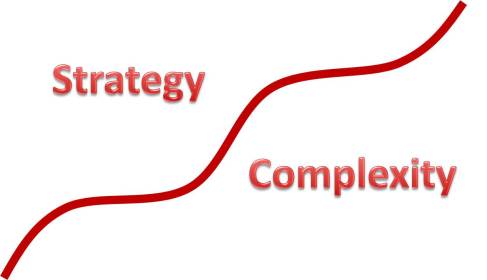
A consulting industry first: strategy architected around complexity principles

25 Tuesday Feb 2014

Posted by lnedelescu in complexity, consulting, design thinking, innovation, knowledge, management, problem solving, strategy

≈ Leave a comment

Tags

Alignment, complexity, Criteria, Innovation, Performance, Peter Drucker, phase transitions, Portfolio, Qualitative Leaps, Quantitative, strategy

Image

When people ask me what it is that I do, they often act surprised and sometimes suspicious upon hearing my answer: “I solve wicked problems with undefined parameters”; yes, really.

Continue reading →

Your boss, the middleman – Part II

20 Thursday Feb 2014

Posted by lnedelescu in business, human capital, management, Organizational Development, problem solving

≈ Leave a comment

Tags

Boss, Business Talent Group, Charles Handy, Economy, Elephants, Fleas, Freelance, hierarchy, management, Middlemen, Roger Martin, Talent

Image

I ended my initial post on this topic with a pointer to the so-called “freelance economy”. In this post I want to take this thread further, as I think it can shed light into the future of employment.

What I was implying at the end of my initial post is that reducing or even doing away with “middleman” corporate hierarchies in a post-materialistic, fluid economy of ideas doesn’t lead to anarchy. Rather it logically leads to a “freelance economy”, a world where, in British management philosopher Charles Handy’s words, free-floating freelancer “fleas” service multiple corporate “elephants” following the need for their specific talents.

Continue reading →

Your boss, the middleman

19 Wednesday Feb 2014

Posted by lnedelescu in business, human capital, management, Organizational Development

≈ 3 Comments

Tags

Boss, Career, Corporations, Customer, Executives, Manager, Market, Middlemen, Performance Appraisals, Professional Growth

Image

For all you hard-working, well behaved corporate folk out there I suggest you wake up from the illusion of getting ahead by meeting or even exceeding your performance objectives. You will get that occasional 7.5% annual raise and you may even get a bonus once in a while, but it’s all part of a linear revenue ascendance mostly eroded by inflation or even wiped out by the occasional Wall Street black swan that dissolves your wealth.

Continue reading →

Modern society as an inertial machine

18 Tuesday Feb 2014

Posted by lnedelescu in Crisis, future, human capital, learning, society, technology

≈ Leave a comment

Tags

Answers, Conspiracy Theory, effectiveness, Efficiency, Idiosyncrasies, Machine, Questions, Recruitment, Skills, Society, Talent, Technology

Image

Conspiracy theories vs. idiosyncrasies

I for one am no big fan of conspiracy theories. I see them as the construct of minds unable to grasp modern life’s intricacies. The fact that few of us manage to agree within the same family leaves me suspicious as to the proliferation of occult groups with the coherence to pull the world’s strings – that is assuming they would possess the means. I have however become convinced that society doesn’t need conspiracies to create its own self-imposed idiosyncrasies which in turn come with a hefty price.

Continue reading →

Our creativity liquidity crisis

17 Monday Feb 2014

Posted by lnedelescu in capitalism, human capital, problem solving, society, taxonomy

≈ Leave a comment

Tags

creativity, Currency, Economy, George Gilder, Harvard Business Review, Knowledge, Liquidity, Money, Peter Drucker, Roger Martin

Image

The road from the Renaissance to the iPhone might have taken much longer had the world not invented modern banking and finance. Money, an abstraction of value, is indeed a necessary precursor to globalization. It is also the source of systemic crises when the abstraction loses touch with the underlying value as when sophisticated financial instruments become self-referential.

Continue reading →

Tools are only as effective as the mindsets that employ them

13 Monday Jan 2014

Posted by lnedelescu in complexity, design thinking, Organizational Development, technology

≈ Leave a comment

Tags

CES 2014, Common Sense, complexity, Design Thinking, Karl Popper, Network Theory, Organizational Development, Roger Martin, Technologization, Tools

Image

With the annual Consumer Electronics Show in Las Vegas attracting worldwide media coverage last week, let me be the one to posit that technological innovation is only as effective as our mental models are able to keep up.

Continue reading →

Big idea 2014: the world still defenseless against mediocrity

05 Sunday Jan 2014

Posted by lnedelescu in democracy, future, human capital, society

≈ 2 Comments

Tags

2014, causality, creativity, Credo, democracy, Frank Lloyd Wright, If-then, Mediocrity, Progress, Society, Steve Jobs

Image

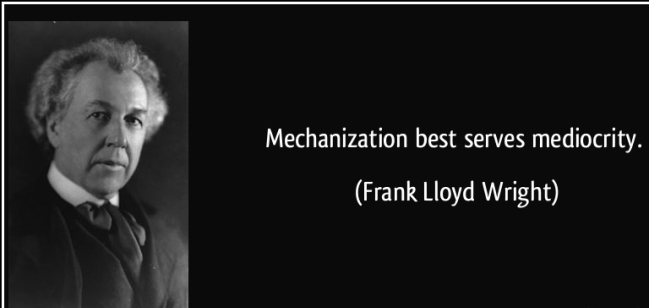
From Ivy League scholars to country presidents, mediocrity permeates society’s highest echelons. Indeed, we remain defenseless against it in the 21st century. We are hard at work battling world financial crises, poverty and social inequality even as we produce mediocre leaders who proliferate populist, symptomatic, efficient but not effective “solutions” to these and other pressing issues. Democracy itself, the most advanced social construct to date, is no match for mediocrity. I propose keeping mediocrity in check is a much more effective way to go about our world’s progress. We would first need to understand how it evades society’s filters.

Continue reading →

On why the pursuit of truth is an asymptotic affair

21 Thursday Nov 2013

Posted by lnedelescu in complexity, knowledge, learning, paradox, philosophy, society

≈ Leave a comment

Tags

Absolute, Cosmology, divinity, George Box, Knowledge Funnel, Leonardo Da Vinci, models, Murray Gell-mann, Progress, Reality, Roger Martin, Singularity, Sistine Chapel, Truth, Universe

Image

Roger Martin’s “knowledge funnel” is a very useful model for understanding the human pursuit of knowledge. Man contemplates a new mystery using intuition to infer causality, by trial and error arrives at an inexact approach that somehow seems to tame the new mystery before finally framing the new phenomenon with the objective precision of a rigorous formula. This is the process by which the vast unknown is distilled into bits of knowledge that our puny minds can manipulate.

Continue reading →

Vienna – random observations

13 Wednesday Nov 2013

Posted by lnedelescu in society

≈ Leave a comment

Tags

Austria, Random Observations, Vienna

Image

Here are a few opinion-free, “pulp” observations of Vienna:

– people take the time to hang their coats on coat hangers and put their umbrellas in umbrella bins;

– it appears safe for small children to walk by themselves on the street;

– you have to pay attention to the writing on restaurant windows: “cafe-restaurant” is very different than “cafe-bar” or “cafe-lounge”;

– you as the paying customer of course have rights, but don’t assume you are the center of the universe;

– there are very few balconies;

– there is still a fascination with American gospel music;

– general dress code leans towards the practical;

– there are many boutique stores with various paraphernalia that seem to get foot traffic.

The True Capitalist Manifesto

29 Tuesday Oct 2013

Posted by lnedelescu in capitalism, future, human capital, philosophy, society

≈ 1 Comment

Tags

Capitalism, Communism, Harvard Business Review, Industrial Revolution, Karl Marx, Knowledge Economy, Manifesto, Umair Hague

Image

Picture the time in which Karl Marx’s Communist Manifesto emerged. The Industrial Revolution, unraveling in full force, was very much based on a materialist world view. Since physical resources are limited it’s only normal that someone, Marx or otherwise, would have signaled that a zero sum race for wealth will make some extremely rich only at the expense of others. And indeed there was some truth to that, as exceedingly ambitious industrialists seemed to have no limit to their greed. There’s no leap of logic required to arrive at the “class warfare” idea aimed to right the inequities generated by a zero sum game world. Accumulation of things, cordially known as consumerism in our time, was also decried by communists as a sickness of the soul.

Continue reading →

← Older posts
Newer posts →

Categories

business capitalism Communication complexity consulting Crisis democracy design thinking Emerging Markets future human capital innovation Investment knowledge learning management Organizational Development paradox philosophy problem solving sales science society strategy taxonomy technology Uncategorized

Latest

  • Intelligence is Intentional
  • Plenty of Room at the Top: the case for a viable man-machine economic future
  • What does an “innovation economy” really mean?
  • Lightfoot strategy
  • Capital: a brief philosophy

Archives

  • June 2015
  • May 2015
  • April 2015
  • March 2015
  • February 2015
  • January 2015
  • December 2014
  • November 2014
  • October 2014
  • August 2014
  • June 2014
  • March 2014
  • February 2014
  • January 2014
  • November 2013
  • October 2013
  • September 2013
  • August 2013
  • July 2013
  • June 2013
  • May 2013
  • April 2013
  • March 2013
  • February 2013
  • January 2013
  • December 2012
  • November 2012
  • October 2012

Create a free website or blog at WordPress.com.

Privacy & Cookies: This site uses cookies. By continuing to use this website, you agree to their use.
To find out more, including how to control cookies, see here: Cookie Policy
  • Subscribe Subscribed
    • The art and science of the possible
    • Join 151 other subscribers
    • Already have a WordPress.com account? Log in now.
    • The art and science of the possible
    • Subscribe Subscribed
    • Sign up
    • Log in
    • Report this content
    • View site in Reader
    • Manage subscriptions
    • Collapse this bar